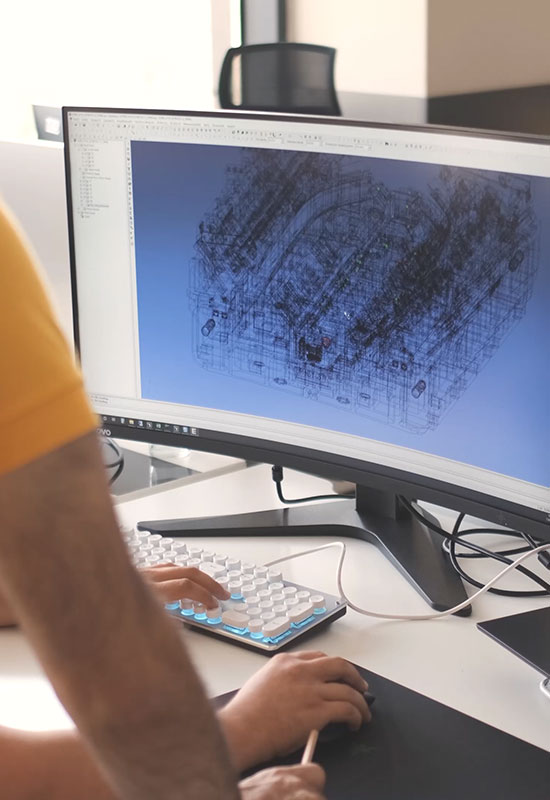
This is the critical stage in which completed die designs are kinematically simulated and their operation under the press is precisely modeled in a virtual environment. During this process, the design is examined to determine whether there are any obstacles (interference/collisions) within the die that could hinder the operation of the mechanisms or the flow of parts. By eliminating all such obstacles before proceeding to die manufacturing, the molds are ensured to move to the physical production stage with zero defects.
The Added Value and Benefits of Kinematic Analysis
Early Error Detection Before Manufacturing: The risk of interference between moving parts, cams, pins, and punches within the mold is identified and corrected in a digital environment before manufacturing even begins.
Perfect Alignment with Press Operating Curves: The specific operating curves (stroke, speed, angle) of the presses to which our customers will mount their dies are requested and imported into the simulation environment. This ensures that the analysis in the virtual environment is 100% aligned with actual production conditions on the shop floor.
Synchronization with Transfer and Crossbar Lines: Particularly for customers using transfer presses, the operating curves of transfer arms, grippers, and mechanisms are simulated. This verifies that the die design is fully compatible with the transfer line.
Maximum Production Speed and Efficiency: By analyzing the dynamic effects of press speed on the die, we ensure that the part is pressed at the highest possible strokes per minute (SPM) while maintaining safety.
TKare Engineering; provides high-precision sheet metal die design, simulation, and engineering solutions for the automotive, aerospace, defense, and home appliance industries.